Koch Dynasty and The Tribe

Koch Dynasty and The Tribe

Article By Surjit Singha

Introduction

Koch is an indigenous Tribe of South East Asia, They are also known as Rajbanshi, Koch Rajbongshi, Koches, in various parts of the world. They are ab-origin Tribe and lives close to nature. Their main livelihood is farming and they depend on forest products for their survival.

Primitively they were Animist and still same significance is prevailing among them. Their dialects may vary from place to place.

Traditional Winter clothing among the Tribe:

During winter more covering is required to protect them from the cold, they use a large homespun cloth prepared from Endi Silk at their home, it got a coarse texture and popularly known as Chaddar or An Emit Gilap.

Traditional Umbrella:

They use sunshade crafted with the bamboo, they call it Toka or cultivators sunshade. Still, the use of the traditional umbrella is in use during cultivation in paddy field to protect them from the direct sunlight, also being used in their Tribal dance and festivals from time to time.

Clothing of women:

Women whether at home or outside are well dressed in their colorful traditional attires. At home and for ordinary wear, they use a piece of cotton cloth called Patani about 5 feet in length, which is wrapped around the body and tucked up above the upper body so as to reach the knee.

Young girls do not use the single Patani, but they have a small piece of cloth about a foot and a half in breadth, with which they cover their upper part of the body, while the Patani is worn around the waist. When going out two pieces of cloth as large as the Patani are worn, one around the waist and the other round to cover their upper part of the body. This latter is called Agran. Girls and young women wear chaddars wrapped cross-wise round the bust.

Holiday Attire:

The holiday and festive attire of the females, Holiday attire, especially of young women, is very colorful and gaudy. Clothes generally colored in red and yellow, are put on, different colors were chosen for the Patani and the Agran. The Koch Rajbongshi/Rajbanshi women go without a veil or any sort of covering for the head.

Attire for Men:

Men generally wear Angsa of bigger size, which is similar to a towel. They also wear dhoti of different colors, most preferred is white dhoti. Angsa comes in different sizes, colors, and patterns.

Hair not Plaited (Tradition):

The hair is combed and kept tied in a loose knot behind the head; it is never plaited. It is considered indecorous to plait the hair.

Use of Vermilion:

The married women use vermilion above the forehead at the parting of the hair.

Traditional Ornaments used by the Tribe:

They also wear ornaments made of shell bracelets called sankha generally on the left wrist. Those who can afford they wear silver ornaments called churis. Mutha, a kind of silver bracelet, is of common use. Other popular ornaments are silver or gold mala or necklace, and silver Hashli for the neck. Anti or Gold earring, nat or nose ring of gold and silver nakful for the nose, and hank-kharu for the ankle-joint. Rings both of gold and silver are also worn in the globe of the ear.

The children are adorned with silver and gold ornaments, a necklace of small silver coins being much in favor with the mass and still, ornaments with coins are prevailing among the tribe.

Food Habits among the Tribe:

The Koch Rajbongshi’s is a good eater and got a very elastic stomach, and when in difficulty can endure hunger with wonderful patience and can subsist upon almost nothing. The ordinary meal consists of bhat or boiled rice and sak or boiled-leaf vegetables, they are fond of fish, they prefer both fresh fish from the rivers or the dried one. Dried fish is used mostly during the rainy seasons when fresh fish are not caught in large numbers. Pani-machh or tortoise is considered a delicacy. The flesh of he-goat is used, but not so frequently as that of the pigeon, and the use of pork meat is also a common practice among the people. Ducks and wild rabbits are relished.

A common Koch Rajbongshi does not know what a good curry means.

Shidal:

Shidal or fermented fish is one of the favorite foods. It is prepared out of the dried small fish pounded with the green stems of Kachu plants into a paste, which is then rounded into small balls. These are afterward dried in the sun, and stored in a handi or earthen pot covered with ashes. These balls are at times taken out, crushed into powder, and cooked with vegetables, commonly with young green leaves of the jute plant. The preparation is salted with Chekka (chheka is obtained by distilling water through ashes of plantain leaves. It is of a reddish color, and very pungent in taste. Formerly, it performed the function of salt in every household of Cooch Behar. It has not yet fallen into disuse altogether. There are still many people who prefer it to salt, at least in some particular dishes.

Sweetmeats:

They prepare country made sweets called batasha and mola are the chief and most commonly in use. Batasha is a preparation of sugar or molasses. Mola is prepared by mixing moori(Puffed rice), chira(rice flake), til and with boiled molasses, and then making the compound into balls, of flattening it into circles and other shapes. Mola is a delicacy with the children considered among the tribe.

Goora (Powder):

Barley or wheat powder is used in a peculiar way. It is never cooked or made into chapati. The grains are fried and then crushed into small lumps and are technically known as goora. The Goora is also prepared from rice, kaon, and other food-grains in a similar way.

People take two meals:

Generally, two meals are taken: one at about mid-day, and the other shortly after nightfall. In the morning chira(rice flake) or goor(Jagiri) is generally eaten.

At harvest time, when the food is to be in plenty, there is no end of meals. In times of dearness and scarcity the case is the reverse, and one meal in 24 hours is considered quite enough.

Sweet milk is used among the masses by the children. The adults prefer sour or curded milk called dahi. Dahi and Chira with a little salt and a couple of green chilies is a favorite food and is often preferred to rice.

Dishes at a feast:

During feasts large quantities of dal and fish and a sour curry are consumed, dahi or curd being an indispensable item of the menu.

Use of betel and nut is universal:

The use of betel and nut is extensive, especially among women. Dried nuts are very seldom used, and are not much liked. Green nuts and, more commonly, maja(Fermented) or preserved nuts, are preferred. The nut is divided into four pieces length-wise with a small katari or knife, and each is taken with one or two betel leaves added to a bit of lime, and the whole is then chewed. Gach-pan or leaves of the betel creeper growing on the tree, as opposed to barui-pan or betel is commonly used. In fact the preserved nut suits the gach-pan better than the barui-pan. When going out a man carries his batooya or small cloth bag, which among other things is sure to contain a chhilum, some tobacco leaves, some nuts, and betel-leaves. The woman carries small bundle tied in one end of her wearing cloth, containing betel-nuts and betel-leaves, while a Katari is carried in her hand.

Education:

A Koch Rajbongshi prefer to be educated in their mother tongue but since there is no provision available for it, they prefer or choose to be educated or get enrolled in a medium other than their own language.

Recognition of the Language:

Koch Rajbongshi Language or Kamatapuri Language, Koch Hills Language is yet to be recognized in India, Under 8th Schedule of the constitution and also to be recognized under the state of both Assam and West Bengal. A Language bill needs to be passed in both the Lower and Upper house of the Parliament in order to recognize their language constitutionally. Education in own mother tongue is the birthrights of every human being and we need to adore and encourage that.

Occupation of the Tribe:

Koch Rajbongshi Tribe is totally dependent on farming, fishery, animal husbandry, weaving of clothes, milk production from animals, Pig farming, Crop cultivation, and most importantly since they are very close to nature they also depend on the forest products for their daily usages like firewood for cooking, wild fruits, and plants for consumption, wild grass for the consumption of domesticated animals, wild bamboos and wood for the construction of their house.

Habitat:

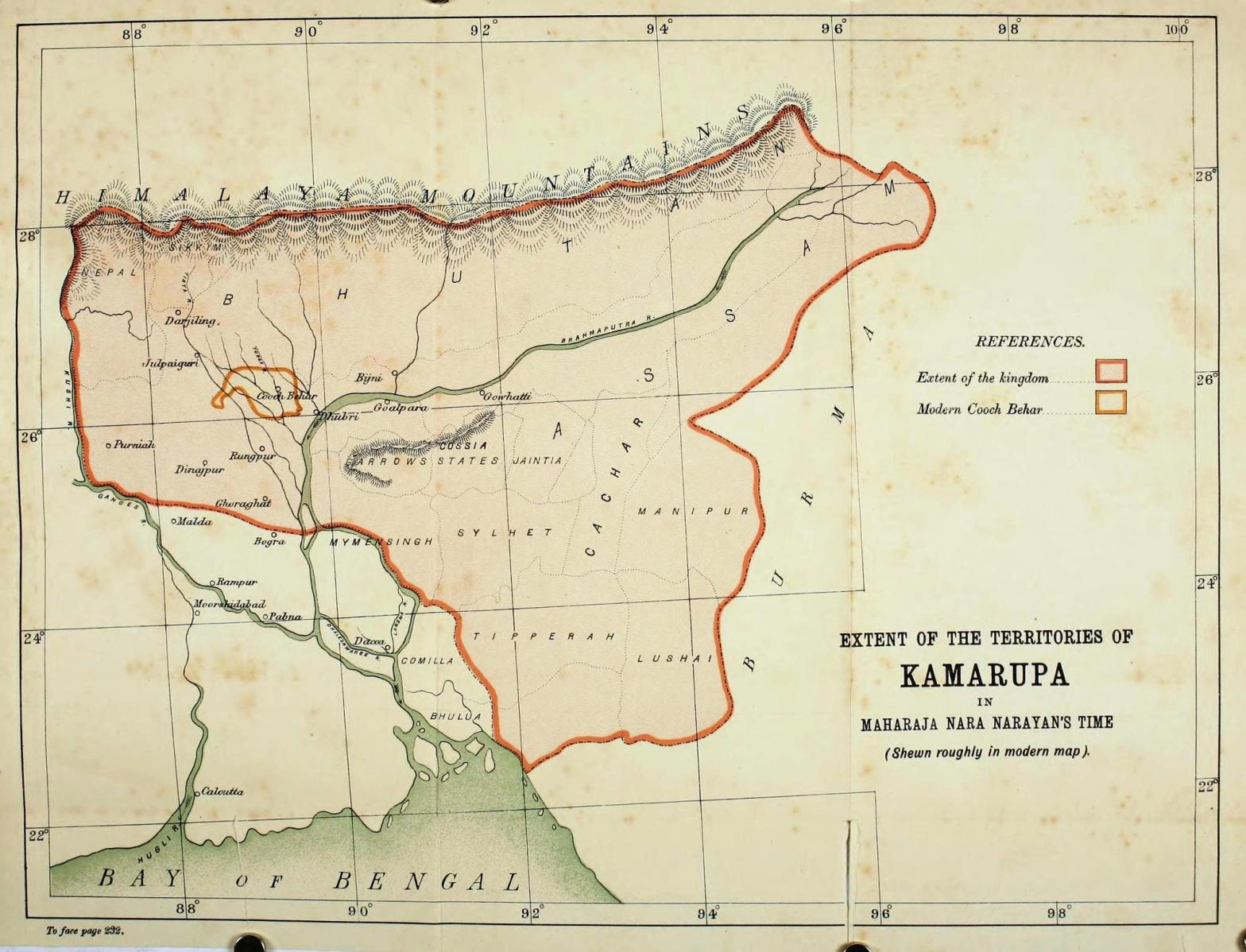
Koch Rajbongshi Tribe can be found in various countries which they consider it to be their homeland, they are found in Assam, North Bengal, Meghalaya, Nepal, Bhutan, Myanmar, Rongpur part of Bangladesh and other countries too.

Status:

The Koch Rajbongshi’s of Assam consider themselves as Tribal by birth because that is the reality and fact, The government of India had recognized them two times as Schedule Tribe under the special ordinance, but subsequently, it has lapsed because no further bill was introduced in the parliament as of now.

Collection of Patani, Agran, Angsha, Traditional Ornaments and various traditional attires of the Koch of Meghalaya, attires of Koch Rajbongshis’ of Assam and North Bengal, Bangladesh and Nepal.

Koch of Meghalaya and various traditional attires, Koch of Meghalaya are recognized as Schedule Tribe (ST) by the Government of India. Koch Hills language is recognized in the State of Meghalaya.

Below: Koch Rajbongshis’ of Assam

Below: Koch Rajbongshis’ of Nepal ( Koch Rajbongshis’ are mainly inhabited in the parts of Kochila Province (Sunsari, Morang, Jhapa) now in Nepal, Koches of Nepal are demanding a separate Homeland called Kochila or Koch Land either as Sovereign Nation or a Separate Province. Koch Rajbongshis’ of Nepal are recognized as “Adivashi” in the Nepal Country.

Koch Rajbongshis’ of Undivided Goalpara Province Presently it is a  part of the State of Assam

Koch Rajbongshis’ of Assam

Reference:

Chaudhuri, H. (1903). The Cooch Behar State and its Land Revenue Settlements. Cooch Behar City, Cooch Behar State: Cooch Behar State Press.

Last Updated: 08 October 2018

Project: Koch
Sibendra Narayan Koch

Sibendra Narayan Koch

Compiled and Edited By Surjit Singha

Sibendra Narayan Koch was known for his literary works and for various democratic movements for the Koches living in Assam and Meghalaya. He was born in Guthulibari village of Garo Pahar District of the then undivided Assam on May 21, 1937, Sibendra Narayan Koch represented the Mendipathar Legislative Assembly Constituency in the Meghalaya Assembly in 1972.

He belonged to the Koch community which is one of the minority tribes of Meghalaya, represented the community as a member of the legislative assembly of Meghalaya as an elected member. He was the founder general secretary of the Garo Pahar District Koch Sanmilan and it was due to his efforts that the Koches of the Meghalaya were recognized as Scheduled Tribe by the Meghalaya Government.

Koch has authored a number of books on the history, language, and culture. His ‘Koch Janagosthir Atit Sandhanat Eti Khoj’ is regarded to be a magnum opus in this regard. For this book, he was conferred the title ‘Koch Ratna’ by the Brihattar Koch Janagosthiya Samaj and the Meghalaya Koch Sanmilan at the 2015 Dalu session of the Meghalaya Koch Sanmilan.

His huge collection of books includes all the volumes of the Vedas, Upanishads various editions of the Ramayana and the Mahabharata and many other classical titles as well as all the significant books like the famous ODBL (The Origin and Development of Bengali Language) and Kirata Jana Krti by Suniti Kumar Chatterjee, Banikanta Kakati’s Assamese Language and its Development and Formation, almost all the volumes by the patriarch of history from the east, H.K. Barpujari, books on Garo history and culture from William Carey, Major Playfair to Milton Sangma and the list goes on.

Sibendra Narayan Koch was well versed in Assamese, Bengali, English, Hindi, Sanskrit, Garo, and Koch languages. He was a polyglot in the true sense of the term. He has been a voracious reader and also a prolific writer. Quite significantly, he used to write in English and Assamese only. His most significant book is on the history of the Koches which he wrote in Assamese. One of his major articles on the Koches was published in the book, Culture, Ethnicity, and Identity: A Reader which was published in 2012.

The demand for ST status for the Koch Rajbanshis became one of the first major democratic ethnic movements of Assam with unprecedented popular support. In the democratic movement of the Koches of the Assam who are popularly known as Koch Rajbongshi (Koch), Sibendra Narayan Koch was actively involved as one of its intellectual guides along with other intellectuals. He has shown genuine interested for the ST Hood of the Koch Rajbanshis to be granted ST status in Assam and also in Meghalaya.

Sibendra Narayan Koch as a scholar belongs to the class of thinkers who have given primacy to the mythic dimensions of historical discourses thereby opening up a fresh insight to look at the entire enterprise of historical exploration of the past. According to him, the arrival of the Koches happened through the Western terrain onto the Eastern territory; he has extensively cited illustrations from numerous ancient texts and has also made an extensive philological inquiry to corroborate his arguments. He even quite substantially argued that the Indus Valley civilization bore crucial evidence of the presence of the Koches as its actual architects. He has also provided a long list of place and geographical names that etymologically belonged to the Koch lexicography that included the places like present Punjab, Kerala, Tamil Nadu, Bengal, Assam and the whole of North East.

THE KOCH UNVEILED AN EXTRAORDINARY TALK BY SIBENDRA NARAYAN KOCH: PART 1

THE KOCH UNVEILED AN EXTRAORDINARY TALK BY SIBENDRA NARAYAN KOCH: PART 2

THE KOCH UNVEILED AN EXTRAORDINARY TALK BY SIBENDRA NARAYAN KOCH: PART 3

THE KOCH UNVEILED AN EXTRAORDINARY TALK BY SIBENDRA NARAYAN KOCH: PART 4

Reference:

Death of Koch Ratna mourned (2015, July 13). In The Assam Tribune. Retrieved October 12, 2018, from http://www.assamtribune.com/scripts/mdetails.asp?id=jul1315/city053

Prodhani, J. (n.d.). Sibendra Narayan Koch: A Scholar Par Excellence. In Academia. Retrieved October 12, 2018, from http://www.academia.edu/19845780/Sibendra_Narayan_Koch_A_Scholar_Par_Excellence

Last Updated: 12 October 2018

Project: Koch

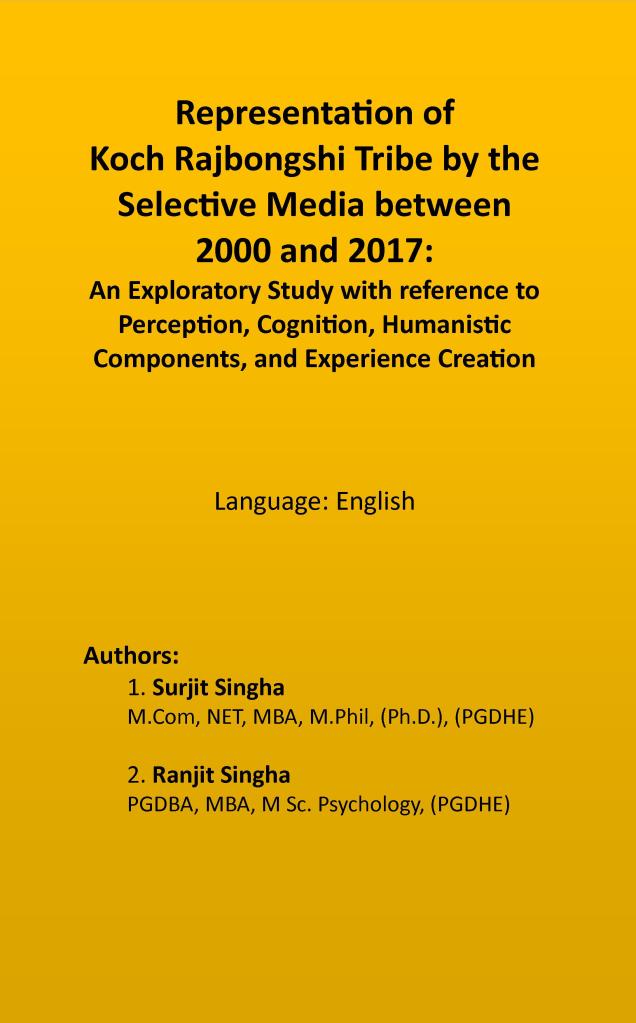
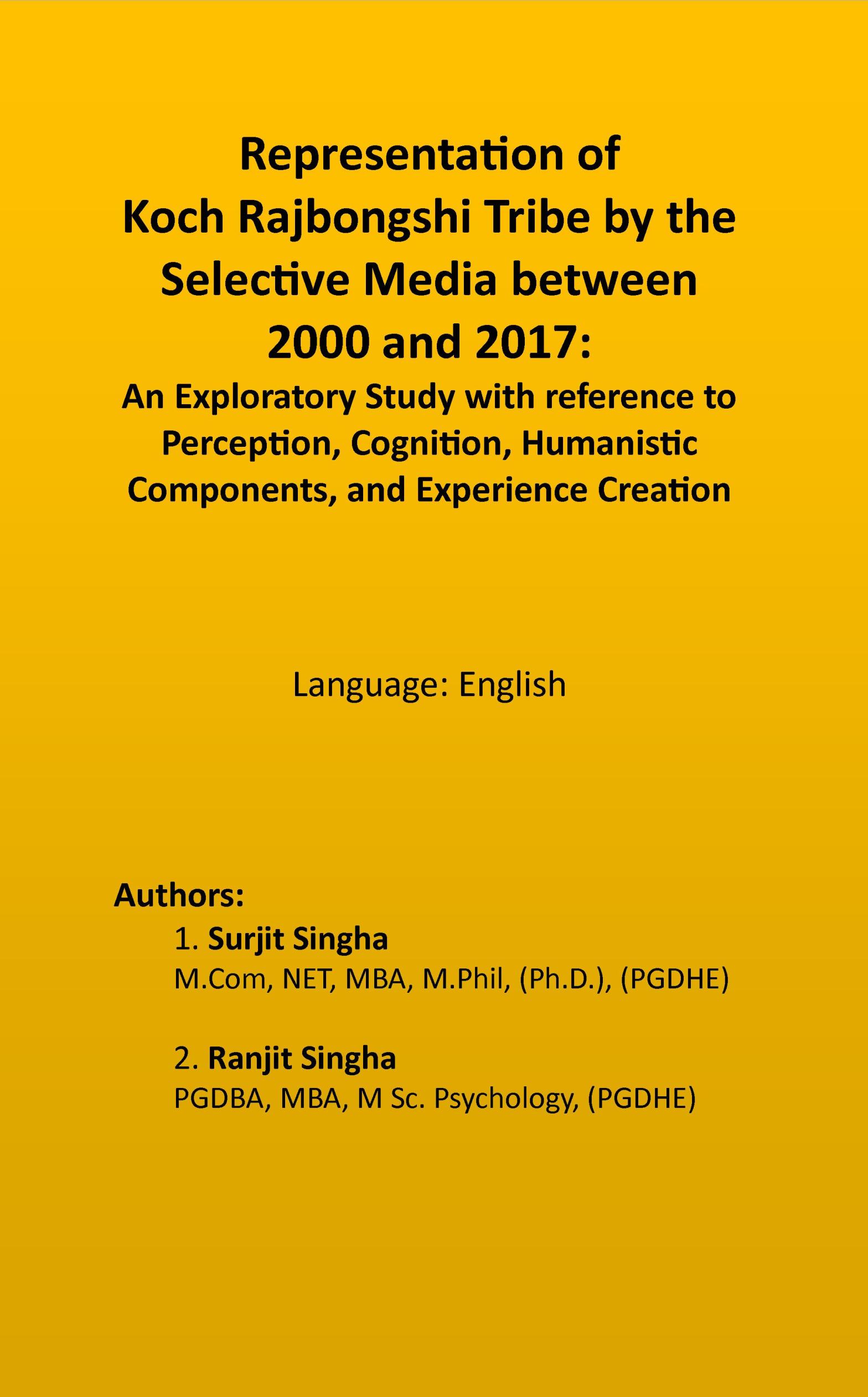
Representation of Koch Rajbongshi Tribe

Representation of Koch Rajbongshi Tribe by the Selective Media between 2000 and 2017: An Exploratory Study with reference to Perception, Cognition, Humanistic Components, and Experience Creation.

The study test the representation of Koch Rajbongshi Tribe in the media towards the sector of “Culture of Koch Rajbongshi”, “Language of Koch Rajbongshi” , “History of Koch Rajbongshi”, Community (Koch Rajbongshi), Violence towards society, it emphasis on establishing the co-relation of media and Koch Rajbongshi tribe’s representation in the media .

This study tests the link between media and the perception they create via a representation of the Koch Rajbongshi tribe in society. The resulting bear that hardly any matter related to the culture has been focused in the mainstream media headline but rather the whole tribe is being projected as an anti-social element in some of the article. Some of the media articles had tried to project that KPP and KLO are both sides of the same coin. Some of the media tried to establish the co-relation between KLO, KPP, and Rajbongshi or Koch Rajbongshi tribe.

Media can play a significant role in creating a perception among its readers; Selective media had tried to influence the negative feelings of human behavior and their perception, cognition and humanistic components by the representation of the Koch Rajbongshi tribe in a negative approach. A few selective media played a significant role to create a conflict between the Koch Rajbongshi tribe and in the minds, perception, and cognition of the reader. The selective media had tried to change the perceived reality of the Koch Rajbongshi tribe which was a glorious past of Koch Dynasty and few selective media played a constructive role in producing additional negative perception for the society, they tried to create a mental stimulation about Koch Rajbongshi with negative information that surrounds its reader so that the cognition, perception of the reader may be manipulated with the stimulation of the given information by the selective media.

The Kindle Book is also available in the Following Countries:

United States: https://www.amazon.com/dp/B083XHSKGM

United Kingdom: https://www.amazon.co.uk/dp/B083XHSKGM

Denmark: https://www.amazon.de/dp/B083XHSKGM

France: https://www.amazon.fr/dp/B083XHSKGM

Spain: https://www.amazon.es/dp/B083XHSKGM

Italy: https://www.amazon.it/dp/B083XHSKGM

New Zealand: https://www.amazon.nl/dp/B083XHSKGM

Japan: https://www.amazon.co.jp/dp/B083XHSKGM

Brazil: https://www.amazon.com.br/dp/B083XHSKGM

Canada: https://www.amazon.ca/dp/B083XHSKGM

Mexico: https://www.amazon.com.mx/dp/B083XHSKGM

Australia: https://www.amazon.com.au/dp/B083XHSKGM

India: https://www.amazon.in/dp/B083XHSKGM

Get your paper back delivered at your address:

United States: https://www.amazon.com/dp/1661254322

United Kingdom: https://www.amazon.co.uk/dp/1661254322

Denmark: https://www.amazon.de/dp/1661254322

France: https://www.amazon.fr/dp/1661254322

Spain: https://www.amazon.es/dp/1661254322

Italy: https://www.amazon.it/dp/1661254322

Japan: https://www.amazon.co.jp/dp/1661254322

Canada: https://www.amazon.ca/dp/1661254322

SUSTAINABLE ENTREPRENEURSHIP FOR NORTH EAST INDIA

SUSTAINABLE ENTREPRENEURSHIP FOR NORTH EAST INDIA

Asst. Professor (Ph.D.) Surjit Singha, Kristu Jayanti College (Autonomous), Bengaluru, Karnataka, India.

MSc Psychology. Ranjit Singha, Independent Researcher.

Introduction:

North East India Comprise of Assam, Manipur, Meghalaya, Arunachal Pradesh, Mizoram, Tripura, Sikkim are located in the North East Part of India, the region share more than 4,500 kilometers (2,800 mi) of International Border with Tibet, China in the north and Myanmar in the east, Bangladesh in the South, Bhutan in the North West. North East comprised of 262,230 square kilometers (101,250 sq mi), almost 8 percent of that of India’s geographical area. The state of the North East Region is officially recognized under the North East Council (NEC) which was constituted in the year 1971. In the year 2002, Sikkim was added as a part of the North East Region. The North East region can be further categorized on the basis of its physiographic, like Eastern Himalaya, the Patkai, and the Brahmaputra and the Barak Valley Plains. The Highest Mountain peak is Kangchenjunga which is about 8,586 m (28,169 ft). The region is rich with mineral resources, Flora and Fauna.

The objective of the Study:

1. To understand the working model of Sustainable Development within the territory of North East India.

2. To Suggest the possible sustainable development model for North East India to reach MDG (Millennium Development Goal) through SDG (Sustainable Development Goal).

3. To generate a possible sustainable development business to generate revenue for the unemployed youth.

4. To understand the possibility of Green Business in North East India.

5. To Explore the Sustainable method of Koch Rajbongshi Tribe in the North East regions and its adjoining area with reference to the environment, agricultural productivity, sustainable life, and sustainable process.

Published chapter in a Monograph (Book)
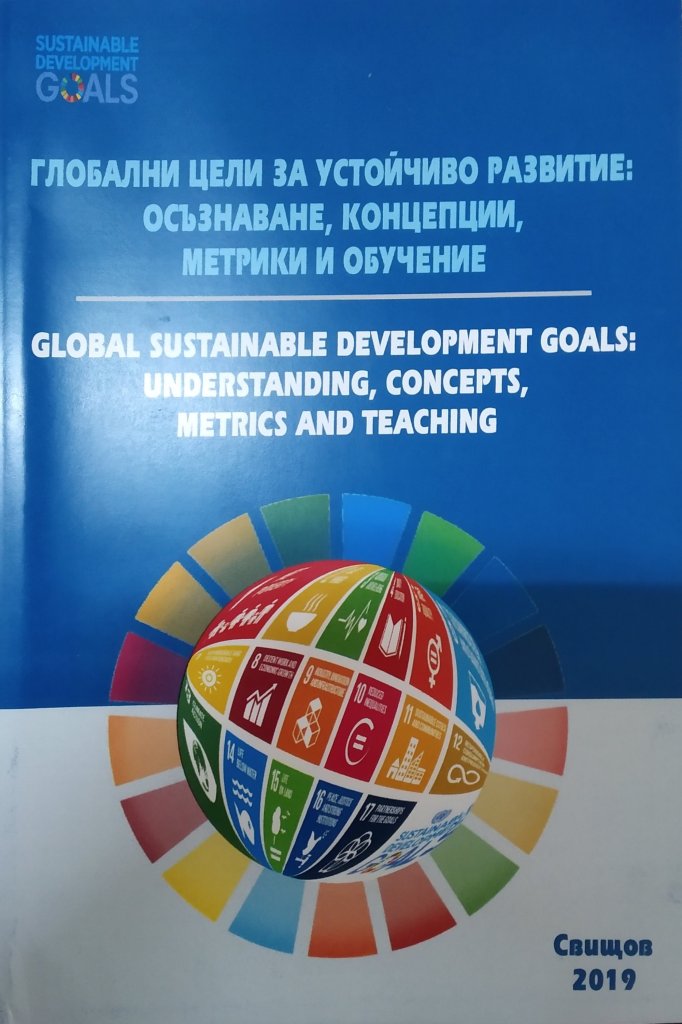
Title of the Book: Global Sustainable Development Goals: Understanding, Concepts, Metrics and Teaching
Chapter Title/Name: Sustainable Entrepreneurship For North East India
Country: Bulgaria
Publisher: Tsenov Academic Publishing House, Svishtov, 24, Gradevo Str., Bulgaria.
Year: Sept-2019
Page: 161-187

Language: English, Bulgarian, Russian.
ISBN 978-954-23-1752-4

To Cite:

Surjit Singha, R. Singha. (2019). Sustainable Entrepreneurship For North East India. In A. Marcheva & N. Yankov (Eds.), Global Sustainable Development Goals: Understanding, Concepts, Metrics and Teaching (pp. 161-187). Svishtov, Northern Bulgaria, Bulgaria: Tsenov Academic Publishing House, Svishtov, 24, Gradevo Str., Bulgaria.

https://www.academia.edu/40917399/SUSTAINABLE_ENTREPRENEURSHIP_IN_NORTH_EAST_INDIA

Integrated Sustainable Green Entrepreneurship for North East India

Integrated Sustainable Green Entrepreneurship for North East India

International Journal of Advance and Innovative Research, Volume 6, Issue 1 (XXV): January – March, 2019, ISSN 2394 – 7780, Page 27-39, UGC Index No. 63571, Impact Factor: 7.36

ABSTRACT
North East India with seven sisters and one brother, a territory with diverse culture and multi-language is blessed with rich flora and fauna. It includes the territory of Assam, Manipur, Meghalaya, Arunachal Pradesh, Mizoram, Tripura (The Seven Sisters) and Sikkim (The one brother). In this article the possibility to venture “Sustainable Green Business for North East India” is being studied, various case studies, articles and research of the North East Geographical area are being studied and analyzed to draw a final conclusion. The unique traits of sustainable living of the Koch Rajbongshi Tribe of North East India were explored and provided a base as an example for sustainable living.

Keywords: North East, Sustainable Green Business, Assam, Manipur, Meghalaya, Arunachal Pradesh, Mizoram, Tripura, North Bengal, Sikkim, Koch Rajbongshi

THE OBJECTIVE OF THE STUDY
1. To understand the working model of Sustainable Development within the territory of North East India
2. To Suggest the possible sustainable development model for North East India to reach MDG (Millennium Development Goal) through SDG (Sustainable Development Goal)
3. To generate a possible sustainable development business to generate revenue for the unemployed youth
4. To understand the possibility of Green Business in North East India
5. To Explore the Sustainable method of Koch Rajbongshi Tribe in the North East regions and its adjoining area with reference to the environment, agricultural productivity, sustainable life, and sustainable process.

CONCLUSION
There is a huge potential of business growth in the North East Area, though there are political instability and insurgent operation is very much significant, in spite of that there are industries like Tea Garden, Rubber Garden are operationally functional and supply of the tea, rubber throughout the country as well as internationally. There is an unemployment problem in the area, However, if Entrepreneurship skills and acumens can be imparted to the youth then there can be a possibility for more successful Entrepreneur. More workshops for skill development would be necessary for the youth so that they can start their new venture with scientific knowledge. Fishery industry has a huge potential, however, there is a requirement of scientific knowledge for rearing fish. There is a huge potential of agriculture but scientific knowledge of modern technology is necessary among the farmers. There is also a need for more government schemes and incentives for poor people of the region. A financial institution need to be go with the financial inclusion policy for the poor people of the region. However, there are very good schemes available for a big industrialist to attract investment in the region. The Koch Rajbongshi Tribe of North East follows sustainable mode of living which is one of the unique traits and need to be documented.

To Cite:

MLA
Singha, Surjit, and Ranjit Singha. “Integrated Sustainable Green Entrepreneurship for North East India.” International Journal of Advance and Innovative Research, vol. 6, no. 1, Jan. 2019, pp. 27-39.
APA
Singha, S., & Singha, R. (2019, January). Integrated Sustainable Green Entrepreneurship for North East India. International Journal of Advance and Innovative Research, 6(1), 27-39.
Chicago
Singha, Surjit, and Ranjit Singha. “Integrated Sustainable Green Entrepreneurship for North East India.” International Journal of Advance and Innovative Research 6, no. 1 (January 2019): 27-39.

WORKFORCE DIVERSITY IMPROVES THE PRODUCTIVITY OF AN ORGANIZATION

Abstract

Diversity can be termed as the presence of dissimilarities amidst the affiliates of a common unit (Jackson, May, & Whitney, 1995). Diversity in organizations is becoming one of the major factors as the present organizations are becoming diversified in terms of the age, educational background, gender, ethnicity of the person, origin of the country, and various uniqueness of the member who are working in an organization (Shaw & Power, 1998). Due to cross border trade and investment the world has become a single global village and due to globalization there is a transfer of resources across the globe. Employing diversified work force became a key ingredient in the human resource polices of the most competing organizations who desire to perform better as most of the organizations understood the value of diversity and the benefits which bring along with it.

Workforce Diversity Improves the Productivity of an Organization (PDF Download Available). Available from: https://www.researchgate.net/publication/323809270_Workforce_Diversity_Improves_the_Productivity_of_an_Organization [accessed Mar 24 2018].

Design a site like this with WordPress.com
Get started